PECTUS TREATMENT WITH 3D SILICONE IMPLANT
3D silicone implant placement can be used in the treatment of pectus excavatum and Poland syndrome.
Frequently Asked Questions:
How Does a 3D Silicone Implant Help?
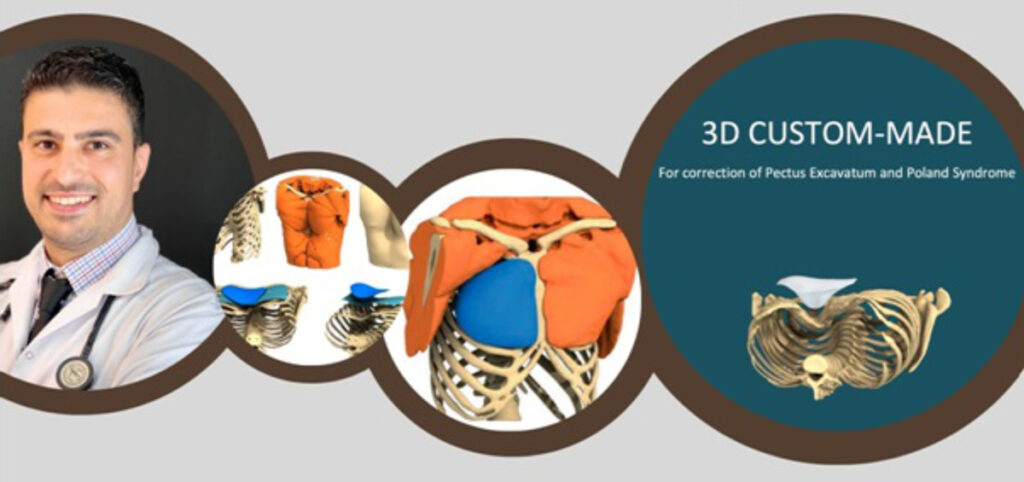
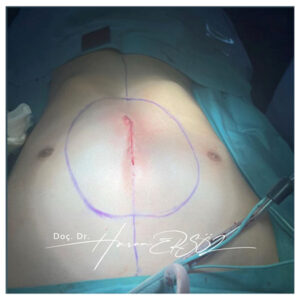
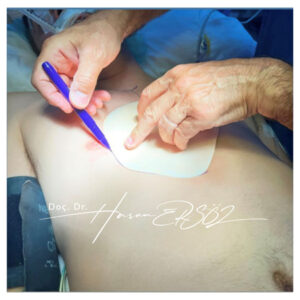
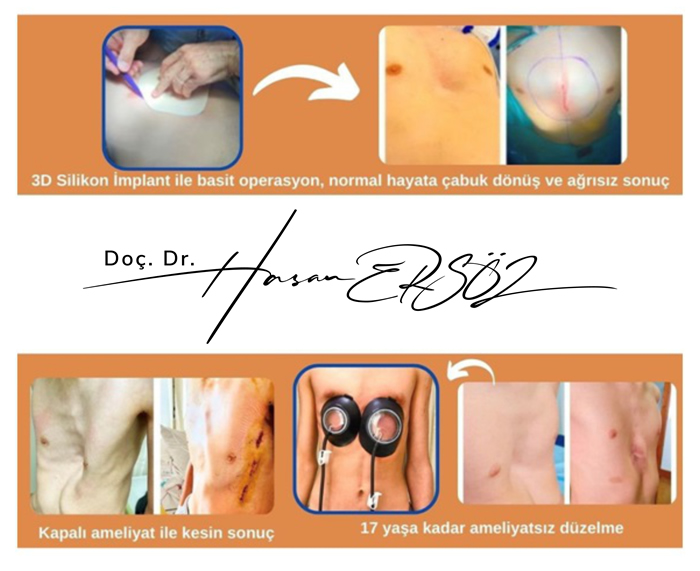
For pectus excavatum, the hollow in the chest wall is filled with silicone material, just as in breast implant surgery. These silicone implants are custom-made for each patient, shaped according to the patient's CT images. After production, in a small operation, the silicone implant is placed under the skin and muscle tissue but on top of the sunken breastbone, and the chest is given a smooth appearance.
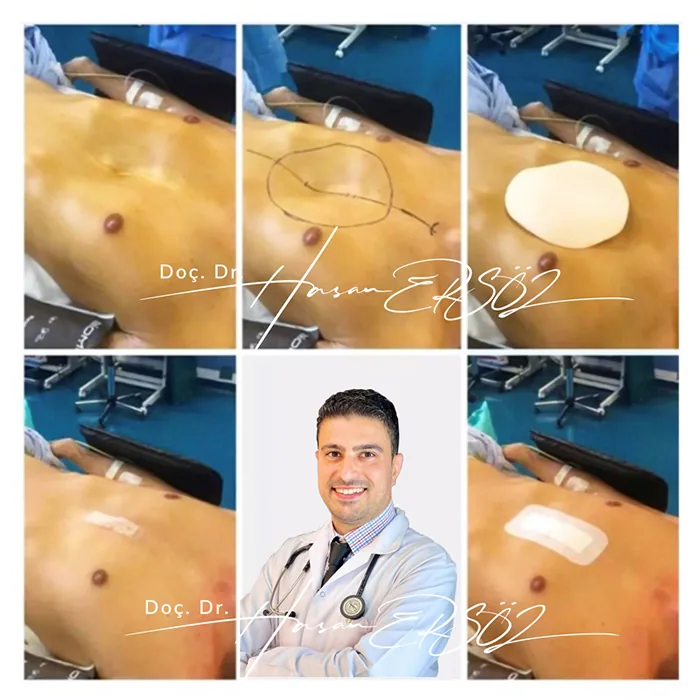
In Poland syndrome, the cosmetic problem caused by the absence of the pectoral muscles, which is the main issue, is corrected by filling the area where the muscle is missing with a custom-made silicone implant.
What Are the Advantages of 3D Silicone Implant Treatment of Pectus Excavatum Over Nuss and Ravitch Surgery?
Its greatest advantage is that the chest cavity is not entered. In addition, the patient's recovery after surgery is quite easy and painless. The patient can return to normal life immediately after surgery, because it is not a procedure that causes pain, such as lifting the bone. The third major advantage is that the implanted silicone never needs to be removed, so the patient will never need another operation for this reason for the rest of their life. In Nuss surgery, by contrast, a separate operation is needed to remove the bars after 3 years. Another advantage is that silicone placement carries no risk of life-threatening complications such as cardiac injury or serious bleeding, which, although rare, can occur in Nuss surgery.
Which Patients Do You Recommend Silicone Implant Surgery For?
First of all, in Poland syndrome, placing a silicone implant through a small incision is definitely more advantageous than the routinely used major operation of transferring muscle from the back to the front, with more incisions. For this reason, I recommend it to all patients with Poland syndrome.
For pectus excavatum patients under 17 years of age, non-surgical treatments (vacuum bell, physical therapy and diet therapy) are always our priority. However, once the cartilage at the ends of the patient's bones hardens (medically, closure of the epiphyseal growth plates), that is, when the patient's growth in height stops (which corresponds to about 17-18 years of age), there is no non-surgical treatment option left. For this reason, above this age our first choice is to bring the bone to its correct position with the Nuss (closed surgery) technique or, if Nuss cannot be performed, the Ravitch (open surgery) technique. In this way, the pressure on the heart and lungs is relieved, the patient's postural problems are corrected, and palpitations and easy fatigue are resolved.
However, Nuss and Ravitch operations have some risks and difficulties for the patient. For example, after Nuss surgery the patient needs pain treatment for 1 month, movement is restricted, and care is needed. For the next 3-6 months the patient cannot play any sports at all, and there are restrictions on the sports they can do during the 3 years until the bar is removed. Silicone implants are ideal for individuals who do not have the time needed for a one-month recovery after surgery because of school or work, or who have no one to look after them, as well as for individuals who practice a sport and want to continue doing so. Some families and patients do not want to take the risk of cardiac injury, which is very rare in Nuss surgery, however low the probability. In this group of patients, remaining with pectus excavatum may not be appropriate either. Because we offer the patient an option to get rid of the poor cosmetic appearance of the deformity and, above all, the lack of self-confidence and the "psychological deformity" that comes with it.
How Long Has This Method Been Used, and Is It Preferred Worldwide?
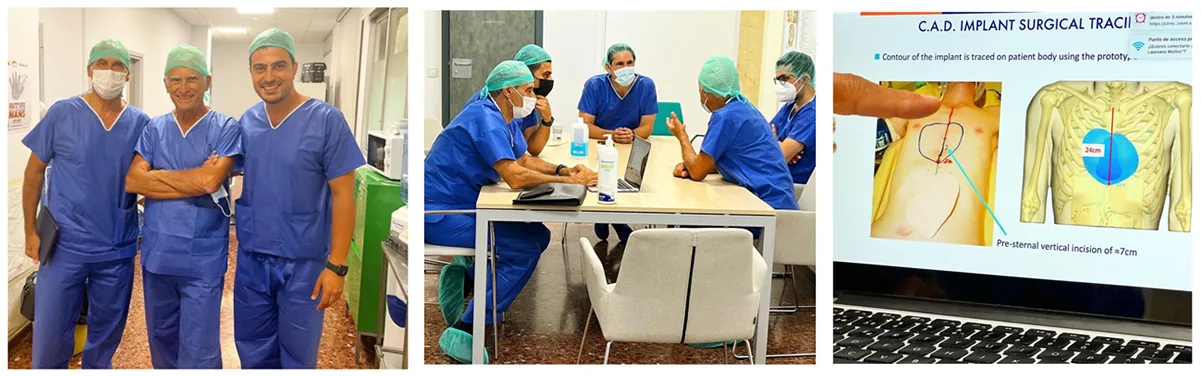
This method has been widely used in Europe for years, and unfortunately we physicians in Turkey have been late in adopting it. In France, it is a widespread method that Professor Dr. Chavoin, president of the European Society of Plastic Surgery, has applied to more than 800 patients over more than 35 years. The silicone implants have remained in his patients for 35 years and the patients continue their lives without any problems. There are no life-threatening complications. He gives presentations at all international scientific meetings. Moreover, it is not only Dr. Chavoin; it has been widely applied throughout Europe for years.