
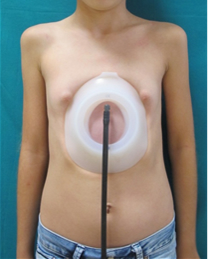
Pectus excavatum (cobbler's chest) is a chest wall deformity characterized by inward depression of the breastbone. Besides causing cosmetic concerns, it can also affect respiratory and cardiac function in some patients. Treatment methods vary according to the patient's age, the severity of the deformity and individual needs.
What Is Vacuum Treatment?
Vacuum bell treatment for pectus excavatum is a non-surgical method used to correct this deformity. The vacuum device applies negative pressure to the chest area and helps pull the sternum (breastbone) outward. This method is preferred especially in mild and moderate cases of pectus excavatum.
How Is It Applied?
- The vacuum device is placed on the chest with a cup or apparatus selected specifically for the individual.
- When the device is activated, it creates a suction effect on the breastbone.
- Treatment sessions usually last 30-60 minutes and are repeated at regular intervals.
- The duration of treatment varies from person to person, but it generally lasts between a few months and one year.
Advantages
- No Surgery: It does not require an operation, so there are no anesthesia or surgical risks.
- Recovery Time: The recovery time is much shorter compared with surgical procedures.
- Painless and Safe: It is a painless treatment option for most patients.
Who Is It Suitable For?
Vacuum treatment is generally recommended for children and adolescents because the breastbone is more flexible at these ages. It can also be used in adults, but results may be somewhat more limited because bone flexibility decreases.
Treatment Results
With regular use and patient compliance, vacuum treatment can significantly improve the appearance of the chest wall. However, complete correction of the deformity may not always be possible, and surgical options should be considered in some patients.
If you need more information about vacuum treatment or other treatment methods for pectus excavatum, we recommend consulting a thoracic surgeon for a detailed evaluation and an individual treatment plan.
Vacuum Bell Treatment for Pectus Excavatum: Advantages and Duration of Treatment
Advantages
- No Surgery:
Vacuum treatment is a non-operative method. It carries no risks related to anesthesia or surgical procedures. - Safe and Painless:
It is painless for most patients. Only mild pressure or a pulling sensation is felt during treatment. - Does Not Interfere with Daily Life:
The treatment is compatible with daily activities, and patients can continue their normal lives. - Cosmetic Improvement:
It provides a noticeable improvement in the appearance of the chest wall depression and boosts self-confidence. - Flexibility and Adaptability:
Effective results are obtained especially in children and adolescents because the bones are more flexible in these age groups. - Duration of Treatment
- The duration of treatment varies depending on personal factors and the degree of the deformity:
- Daily Use: During treatment, the vacuum device is generally used 30-60 minutes a day. In advanced cases, this can increase to 2-3 hours a day.
- Total Duration:
- In mild cases: 6-12 months of regular use may be sufficient.
- In more severe cases: Treatment may continue for 1-2 years.
- Follow-up: Regular medical check-ups are recommended to increase the success of treatment.
- Tips for Effective Results
- Be Patient: Vacuum treatment can take time. Patient and regular use improves the results.
- Medical Follow-up: It is important to follow your thoracic surgeon's recommendations throughout treatment.
- Physical Activity: In addition to treatment, exercises that strengthen the chest muscles may be recommended.